
Programs

Building Climate Resilience in Communities through Women
As per United Nations report, climate change affects everyone, it does not affect everyone equally. Vulnerability to climate change is exacerbated by inequity and marginalization linked to gender, ethnicity, low income, and other social and economic factors. When solutions to climate change address these realities, they are more effective. Women are usually first responders in community responses to natural disasters, leaders in disaster risk-reduction, and contribute to post recovery by addressing the early recovery needs of their families and strengthening community building. Women for Change is providing awareness and building the capacity for girls and women and by involving women in community planning and disaster response efforts, Women for Change is believing to create stronger, more resilient communities that are better equipped to face the challenges of climate change.
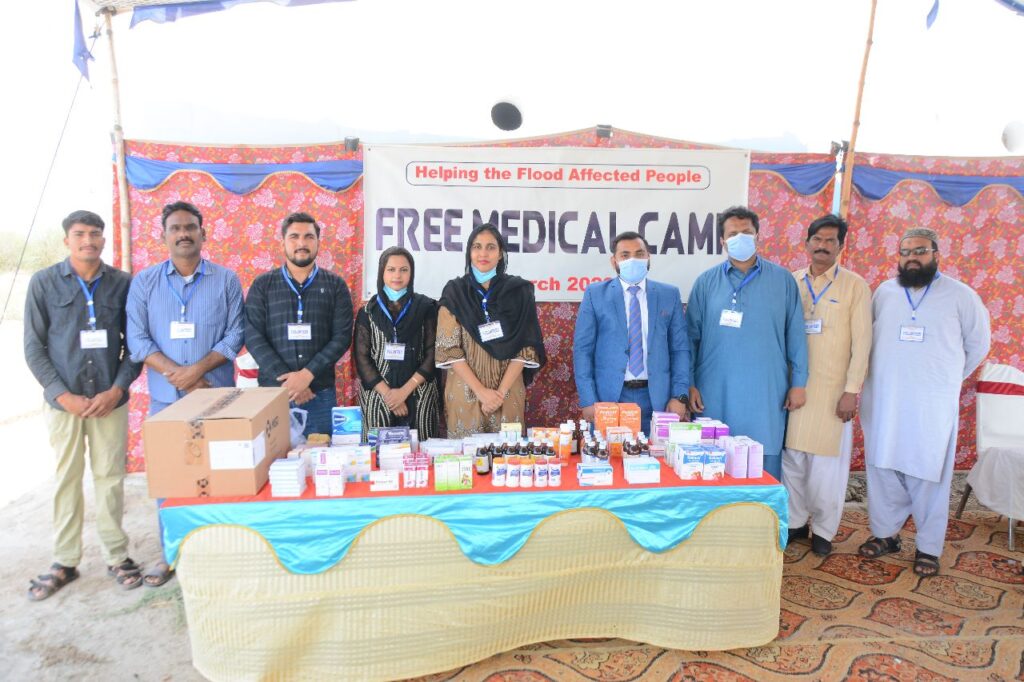
Floods 2022 Rehabilitation and Recovery Program
Between June and August 2022, torrential rains and a combination of riverine, urban, and flash flooding led to an unprecedented disaster in Pakistan. At the height of the flooding, one-third of the country was underwater, 33 million people were affected, and nearly 8 million people reportedly displaced. The floods took the lives of more than 1,700 people, one-third of whom were children.
This flood left behind a trail of destruction and despair, affecting countless families who lost their homes and loved ones. Amidst the chaos and devastation, the team at Women for Change Pakistan was on the front lines, providing critical aid and support to those in need. In our third phase of flood rehabilitation and recovery activities, we are providing books for schoolgirls, medical aid, sanitary kits to girls and women who are affected from floods.n
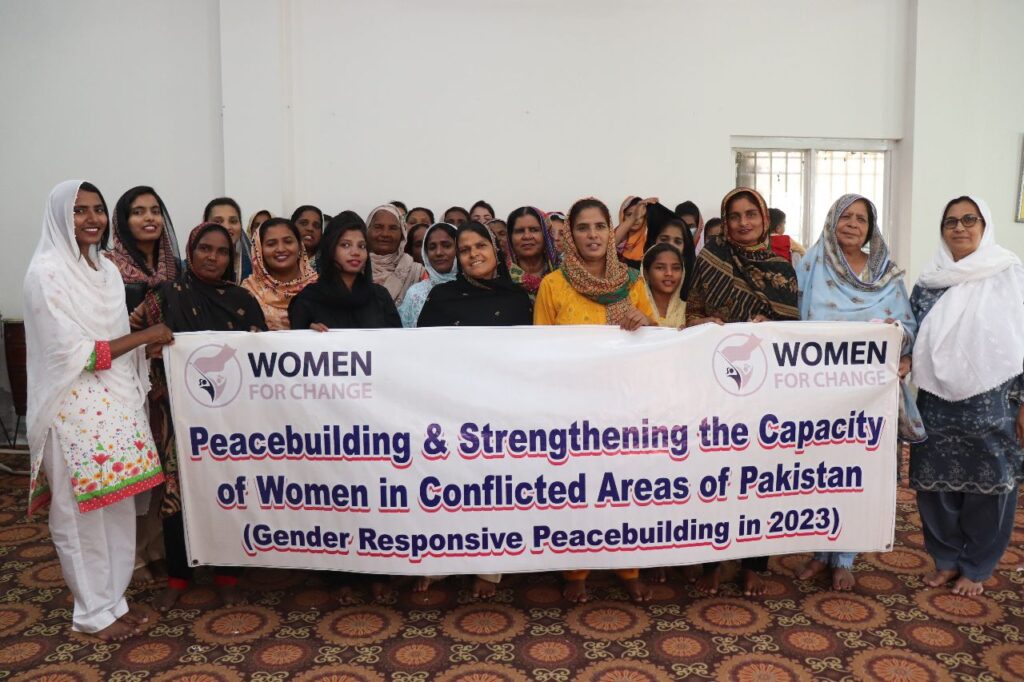
Strengthening the Capacity of Women in Conflicted Areas of Pakistan
(Gender Responsive Peacebuilding in 2023)
Conflict is a gendered activity: women and men have different access to resources, power and decision making before, during and after conflicts. The experience of women and men in situations of tension, war, and post-conflict reconstruction is significantly different. Approximately 80% of today’s civilian casualties are women and 80% of all refugees and internally displaced people worldwide are women and children. As emphasised in the Platform for Action of the United Nations Fourth World Conference on Women, while entire communities suffer the consequences of armed conflict and terrorism, women and girls are particularly affected because of their status in society and their sex. Women play important roles in peacebuilding and are essential to creating long-term, sustainable peace.
